Navigating the Strategic Value of Roth Conversions
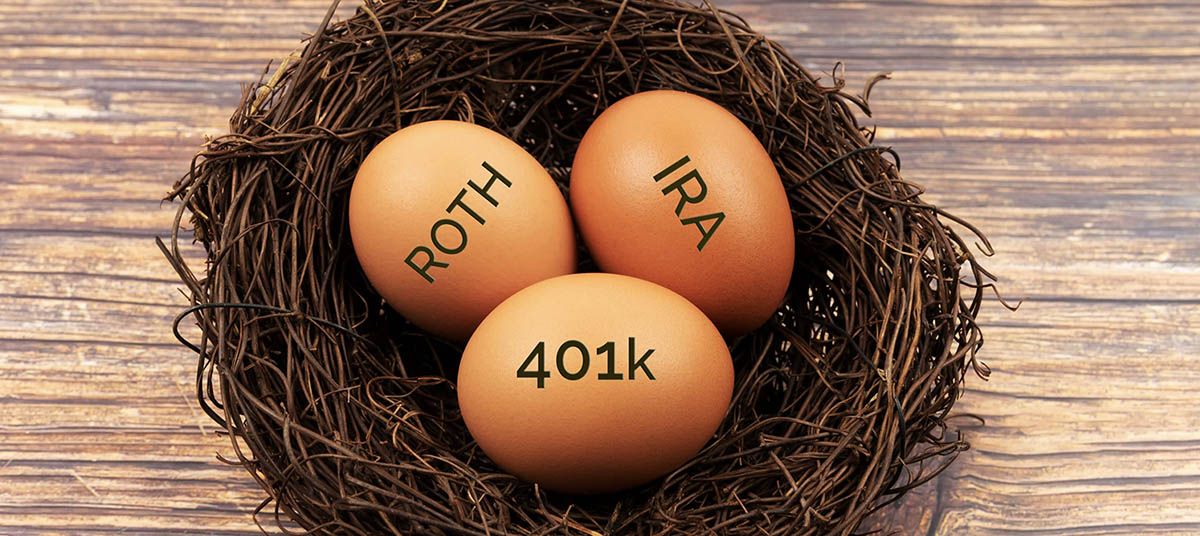
A Roth conversion is one of those tax planning strategies that sounds remarkably simple on the surface, yet it can produce vastly different financial outcomes depending on an individual's age, income level, retirement savings, and long-term objectives. In plain English, a Roth conversion involves moving funds from a traditional, tax-deferred retirement account into a Roth account. The converted amount is generally treated as taxable income in the year the conversion occurs, to the extent that the transfer represents money that has not yet been taxed. This up-front tax payment is the fundamental trade-off for a potentially powerful long-term benefit: future tax-free growth and tax-free withdrawals, provided that all applicable Roth regulations are satisfied.
For many local families and business owners in the Braintree and Quincy areas, the ultimate question is not whether they are permitted to execute a Roth conversion, but whether doing so truly makes financial sense for their specific situation. The answer relies on a complex set of variables, including your current tax bracket, your expected tax bracket during retirement, how long the converted funds will remain invested, whether required minimum distributions (RMDs) are approaching, and how the transaction might impact other areas of your tax return. A Roth conversion can be a highly effective move for one household while being an expensive mistake for another. The ultimate objective is never to convert simply for the sake of converting, but rather to execute a transition only when it is highly likely to improve your long-term tax outcome.
Understanding the Mechanics of a Roth Conversion
To evaluate this strategy, it is helpful to look closely at how these accounts differ. A traditional IRA is built on tax deferral. Contributions to a traditional IRA may be tax-deductible, growth within the account is not taxed during your working years, and any distributions taken later in life are taxed as ordinary income. A Roth IRA operates on the opposite principle. Contributions are made strictly with after-tax dollars, meaning you have already paid income tax on those funds. In exchange, qualified withdrawals from a Roth IRA are completely tax-free. The conversion process allows a taxpayer to transition assets from the tax-deferred column into the tax-free column, moving the tax responsibility from the future to the present year.
This timing difference is the core of the planning strategy. If you anticipate being in a higher tax bracket in the future, paying the tax now at your current, lower rate can be highly advantageous. Conversely, if you expect your tax rate to decrease in retirement, making a conversion today may be much less appealing. Furthermore, because the entire converted amount is added to your taxable income in the year of the conversion, it has the potential to impact phaseouts, tax credits, deductions, and other elements of your tax return that are tied directly to your adjusted gross income (AGI). This is why a comprehensive analysis must look far beyond the retirement account itself to assess the broader financial picture.

The Regular Roth Conversion Process
The most common method is a traditional IRA-to-Roth IRA conversion, which is often referred to as a regular Roth conversion. On paper, the steps appear straightforward: you transfer the funds, report the conversion on your tax return, and pay the resulting tax bill. However, the underlying administrative details require careful attention.
If a taxpayer's traditional IRA contains only pre-tax money—meaning all contributions were fully deducted in the years they were made—the entire converted amount will be subject to income tax. However, if the traditional IRA contains a mix of deductible and nondeductible contributions, the conversion does not automatically become tax-free simply because tax was already paid on a portion of the funds. Instead, the IRS applies a strict pro-rata calculation to mixed IRAs. This means your tax basis is spread proportionally across all non-Roth IRAs you own. Consequently, you cannot simply choose to convert only your after-tax dollars while leaving your pre-tax balances untouched in the traditional account.
This represents one of the most common misconceptions in retirement planning. A taxpayer might assume that because they made specific nondeductible contributions to a traditional IRA, they can isolate those funds and convert them tax-free. In reality, if you hold multiple traditional IRAs, SEP IRAs, or SIMPLE IRAs with pre-tax balances, the IRS treats them as a single combined pool, meaning your conversion will only be partially tax-free.
A Practical Example of the Pro-Rata Calculation
To see how these rules function, suppose a taxpayer has a traditional IRA funded by both pre-tax and after-tax contributions. The taxability of the conversion is not based on which specific dollars the taxpayer wishes to transfer, but rather on the mathematical ratio of the total basis to the entire value of the IRA.
For example, let us look at a taxpayer whose traditional IRA was funded by two distinct historical contributions: a $4,000 contribution that was fully deducted in one tax year, and a $6,000 contribution made in a year when the contribution was not deducted. If the current total value of the IRA has grown to $12,000, we must look at the relationship between the contributions. In this scenario, 40% (calculated as the $4,000 deductible portion divided by the $10,000 total contributions) of the current value is considered pre-tax. Therefore, if the taxpayer converts the IRA, 40% of the account value, or $4,800, would be treated as taxable income, while the remaining portion represents the return of after-tax basis.
The Dynamics of Backdoor Roth Conversions
The term "backdoor Roth" is an informal planning description rather than a distinct, statutory account classification. It generally describes a process where a taxpayer makes a nondeductible contribution to a traditional IRA and subsequently converts that specific account into a Roth IRA. This approach is frequently utilized by higher-income individuals whose earnings exceed the direct contribution limits established for Roth IRAs.
While this strategy can be highly effective, it is not an automatic loophole that guarantees a tax-free transaction. If you own other traditional IRAs, SEP IRAs, or SIMPLE IRAs with pre-tax balances, the pro-rata rules will still apply, which can cause a significant portion of the conversion to be taxable. For this reason, the backdoor Roth strategy works most efficiently for taxpayers who hold little to no pre-tax IRA assets outside of the specific account being converted.
It is also essential for taxpayers considering this route to recognize the critical importance of IRS Form 8606. This specific form is used to track your nondeductible basis over time and to calculate the precise taxable portion of any conversion. Failing to file or correctly complete Form 8606 can result in paying double tax on the same funds or losing track of valuable basis that should have been preserved for future distributions.
Exploring the Mega Backdoor Roth Strategy
The "mega backdoor Roth" is another informal designation that refers to a specialized strategy involving after-tax contributions made within an employer-sponsored retirement plan, such as a 401(k), which are then converted or rolled over into a Roth account. This technique can allow for significantly larger annual Roth funding than standard IRA limits permit, but it is entirely dependent on the specific design of the employer's plan.
Not all workplace retirement plans allow for voluntary after-tax contributions, and many do not permit the in-service distributions or specific plan structures required to execute the strategy. When a plan does support it, the tax treatment is governed by pro-rata allocation guidelines and plan-specific rules. Taxpayers cannot simply designate that they want to move only the after-tax contributions while leaving the accumulated earnings behind, unless both the plan provisions and IRS guidelines explicitly support that allocation.
The IRS has established guidelines outlining how distributions of after-tax contributions and their associated earnings can be split between Roth and traditional retirement accounts in certain qualified plan transactions. In favorable situations, this guidance allows the after-tax portion to be sent directly to a Roth account while the pre-tax earnings are rolled over into a traditional IRA. For individuals whose employers offer a plan that supports this structure, the mega backdoor Roth can be an exceptional tool for accumulating substantial tax-free retirement assets.

Why Taxpayers Pursue Roth Conversions
There are several primary motivations that lead taxpayers to evaluate and execute Roth conversions as part of their long-term financial plans:
- Future Tax-Free Growth: Once your funds are successfully moved into a Roth account and all administrative requirements are met, all future compounding and growth escape federal income tax entirely. Over a multi-decade time horizon, this tax-free compounding can build substantial wealth.
- Strategic Tax Bracket Management: Taxpayers often choose to perform conversions during temporary low-income years. This might occur during early retirement before Social Security or pensions begin, during a career transition, during a business slowdown, or in a year with exceptionally large itemized deductions. The strategy relies on recognizing income today at a known low rate rather than waiting to pay tax at a higher rate later in life.
- Mitigating Future Required Minimum Distributions: Traditional retirement accounts eventually trigger mandatory required minimum distributions (RMDs), forcing retirees to withdraw taxable income whether they need the funds or not. Because Roth IRAs do not subject the original owner to lifetime RMDs, they offer far greater flexibility and control over how and when you draw down your retirement assets.
- Estate and Beneficiary Planning: Leaving a Roth account to heirs is often far more advantageous than leaving a large pre-tax traditional IRA, which will be subject to income tax when inherited. While inherited Roth accounts are still subject to distribution timeframes, the tax-free character of the withdrawals can provide a significant benefit to beneficiaries, particularly those who are already in their peak earning years and high tax brackets.
When a Roth Conversion Is Most Favorable
A Roth conversion tends to provide the greatest financial benefit when a taxpayer meets several specific criteria:
- They are experiencing a relatively low income tax year.
- They have a strong expectation of being in a higher marginal tax bracket in the future.
- They have a long investment horizon before they will need to access the funds.
- They possess sufficient cash outside of the retirement account to pay the resulting tax bill.
- They have little to no pre-tax IRA assets that would trigger the pro-rata tax rules.
- They are focused on reducing future RMD burdens during retirement.
Younger taxpayers often stand to benefit the most from conversions because they have a longer time horizon for tax-free compounding to outpace the initial tax cost of the conversion. Middle-aged taxpayers can use conversions to manage their future tax brackets as their income peaks. While older taxpayers can still utilize the strategy, they have less time to recover the upfront tax cost through compounding, making a precise, selective analysis vital.
When a Roth Conversion May Be Disadvantageous
Conversely, converting traditional retirement assets to a Roth account is often less appealing under the following circumstances:
- The taxpayer is currently in a high tax bracket.
- They expect their tax rate to decrease significantly in their retirement years.
- They anticipate needing to access the converted funds in the near term.
- They must use a portion of the retirement assets themselves to pay the conversion tax.
- They hold substantial pre-tax traditional IRA balances that will trigger heavy pro-rata taxation.
A taxpayer may also be a poor candidate if the conversion income threatens to push them into a higher tax bracket or phase them out of other valuable tax benefits. Because the converted amount increases your adjusted gross income, it can create a ripple effect across your entire tax return, making the true, net cost of the transaction higher than originally estimated.
Required Minimum Distribution (RMD) Considerations
RMDs are a primary motivator for taxpayers evaluating Roth conversions as they approach retirement. Traditional IRAs force retirees to take annual distributions, which can unintentionally push them into higher tax brackets and increase their overall tax liabilities. Because Roth IRAs exempt the original owner from lifetime RMDs, they serve as an exceptional tool for maintaining control over retirement income.
However, delaying this planning for too long can limit its effectiveness. Once you reach the age where RMDs begin, you cannot convert your required distribution directly to a Roth account to bypass tax; the RMD must still be taken as a taxable distribution. For this reason, Roth conversion planning is generally most effective in the years leading up to RMD age, or before mandatory distributions begin to dominate your income profile.
Long-Term Beneficiary and Estate Considerations
The impact of a Roth conversion extends far beyond your own retirement years; it is also a powerful estate planning tool. Inheriting a traditional IRA can place a heavy tax burden on your children or other beneficiaries, who may be forced to withdraw and pay tax on the entire balance during their highest-earning years. Leaving a Roth IRA provides them with a tax-free asset, protecting their inheritance from being heavily depleted by income taxes.
Nevertheless, it is important to remember that inherited Roth accounts are still subject to strict distribution rules for beneficiaries. Estate planning strategies must be reviewed carefully, taking into account whether your primary beneficiary is a spouse, a child, or a trust. A strategy optimized for someone who intends to spend down their retirement assets entirely will look very different from a strategy designed to maximize wealth transfer to the next generation.
Navigating the Indirect Tax Consequences
A Roth conversion should never be analyzed in a vacuum. Because the taxable portion of a conversion increases your adjusted gross income, it can trigger several indirect tax consequences across your return, including:
- Elevating your overall marginal tax rate for the year.
- Increasing the taxable portion of your Social Security benefits.
- Reducing or phasing out specific tax credits and deductions.
- Altering state tax liabilities and other income-sensitive calculations.
This is why it is essential to model the tax impact of a conversion prior to executing the transaction, rather than waiting until the tax return is prepared. A taxpayer may be pleased with the prospect of future tax-free growth, but they must be prepared for the immediate, year-of-conversion tax liability.
Common Pitfalls in Roth Planning
One of the most frequent mistakes is assuming a conversion is completely tax-free simply because the taxpayer previously made nondeductible contributions. As established, the pro-rata rules require you to look at the aggregate of all your traditional IRAs. Another common oversight is failing to properly complete and file Form 8606, which is necessary to document your after-tax basis and prevent double taxation.
Additionally, some taxpayers overlook potential employer-sponsored plan options that might offer a more efficient route than a standard traditional-to-Roth IRA conversion. Finally, taxpayers occasionally convert too much of their account balance in a single year, inadvertently pushing themselves into a substantially higher tax bracket and eroding the financial benefit of the strategy.

Structuring Your Long-Term Retirement Strategy
Roth conversions are a powerful planning mechanism, but they are not universally beneficial. They require a personalized, strategic approach. The most successful candidates for a conversion are typically those who find themselves in a temporary low-income year, anticipate higher tax rates in the future, have a long investment horizon, and can pay the resulting tax bill using non-retirement funds. Conversely, individuals with complex, mixed IRAs, substantial pre-tax balances, or immediate cash flow needs must approach the strategy with caution.
For many households throughout Braintree, Quincy, and the greater Boston area, the primary value of a Roth conversion lies in financial flexibility. It can help you mitigate RMD pressures, optimize your retirement income streams, and build a highly tax-efficient legacy for your heirs. However, the strategy only succeeds when you evaluate the entire financial picture: your current tax bracket, future tax expectations, existing IRA basis, employer plan rules, estate goals, and the immediate impact on your tax return.
When assessing a Roth conversion, the fundamental question to ask is not simply "Am I allowed to do this?" but rather "Will this action improve my overall tax position over time?" For some taxpayers, the answer is a clear yes; for others, it can result in an unnecessarily expensive tax bill. If you would like to explore whether a Roth conversion aligns with your retirement goals, contact our Braintree office today. Our team of experienced Accountants, Tax Preparers, and IRS Enrolled Agents (EAs) is here to provide the personalized analysis and tax planning you need.